STUDY This Page Carefully!
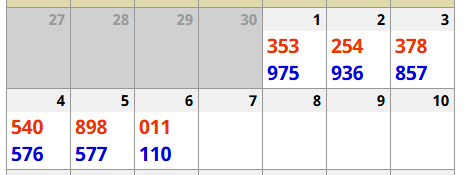
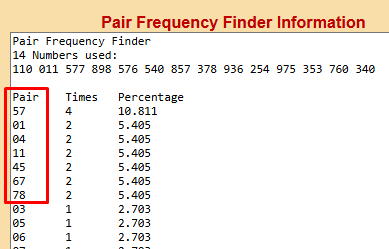
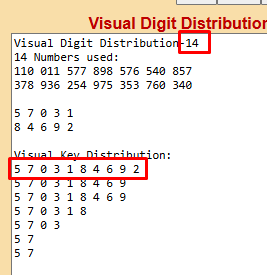
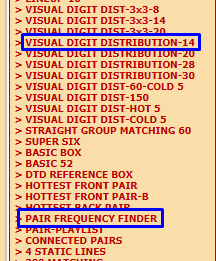
Below you will find my most sophisticated prompt for Grok-3 (I have come to realize that you should use ChatGPT if you want to write a poem or get great ideas–but you should use Grok-3 if you want to work with numbers, Pick 3, lottery, etc). The prompt is in red below. Copy it. Replace my numbers, pairs, and digits with your numbers, pairs, and digits. The prompt below requires that you get the last 100 numbers to get the 10 Most Due pairs for your state. You will also need the 14-number distribution and the pairs in those numbers. Use the exact text I have below – just replace it with your numbers. At the bottom of this page I show you where to find the programs I used to get the numbers, pairs, and digits in the prompt.
===============
===============
Act as a Mathematician.
Act as a Pick 3 Lottery Expert.
Look for relationships and hidden patterns.
Use these patterns to identify what numbers will hit next.
Study these 14 numbers.
The numbers go from right to left.
340 hit first. 110 is the most recent hit.
110 011 577 898 576 540 857 378 936 254 975 353 760 340
Question: What will come after 110 ?
Please provide 20 possible numbers.
Notice that the most common pairs in these 14 numbers are:
57, 01, 04, 11, 45, 67, 78
The digit distribution is: 5 7 0 3 1 8 4 6 9 2
This means that digit 5 hit the most.
Digit 2 hit the least number of times.
Keep in mind that cold digits (84692) will usually play “catch up” and hit soon after.
The 10 most due pairs are below (one or more of them will hit soon).
The 10 Most Due Pairs
09 14 15 28 18
19 17 68 48 49
Post all numbers in low to high format (012, 567, 239, 489). Therefore, do not include in your 20 number prediction numbers like 902 or 823 (post 029 or 238 instead). All 20 numbers should have three different digits (234). No doubles on the list (223, 668, 009, etc.). IMPORTANT: After your analysis, arrange the 20 numbers by probability, with the top 5 to 10 numbers having the best chance of hitting next. Post in this format:
Top 5 (Highest Probability)
024 029 158 256 127
Next 5 (High to Moderate Probability)
034 056 148 269 357
Final 10 (Moderate to Lower Probability)
138 168 178 189 239
345 367 478 568 679
=======================
================================
================================

100 Numbers used:
110 011 577 898 576 540 857 378 936 254
975 353 760 340 530 805 126 366 235 101
230 725 692 757 103 702 064 935 794 012
050 987 468 365 523 962 349 924 770 994
179 046 765 750 281 813 388 034 915 337
023 814 325 863 201 354 415 982 041 332
739 771 376 588 299 210 063 604 985 873
134 672 062 070 299 992 736 853 590 455
851 844 596 322 510 795 551 791 513 817
435 151 662 558 149 279 116 817 491 985
=========================

=================================
Grok-3 seems to “freeze” during its analysis….I have to keep writing the command “Continue” for it to continue its calculations.
=================================
Below are the 20 Numbers Predicted for OHIO
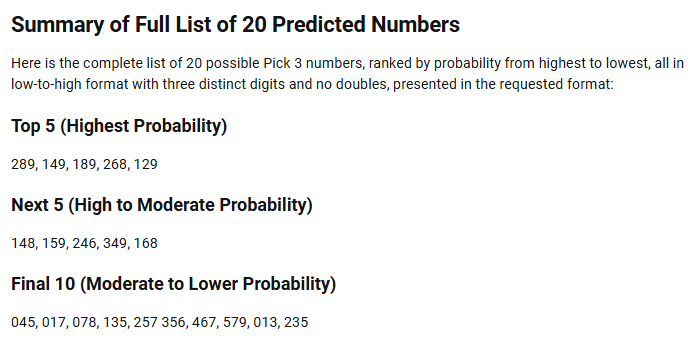
289, 149, 189, 268, 129
148, 159, 246, 349, 168
045, 017, 078, 135, 257 356, 467, 579, 013, 235
========================================
Below is the full output.
As a mathematician and Pick 3 lottery expert, I’ll analyze the provided sequence of 14 Pick 3 numbers to identify patterns and relationships that could help predict the next number after 110. I’ll provide 20 possible numbers, ranked by probability, adhering to the guidelines (low-to-high format, no doubles, three distinct digits) and focusing on cold digits, common pairs, and due pairs. The response will be detailed, clear, and structured for easy readability.
Step 1: Understanding the Data
- Sequence of Numbers: The 14 numbers are provided in reverse chronological order (right to left), with 340 being the oldest and 110 the most recent:
- 110, 011, 577, 898, 576, 540, 857, 378, 936, 254, 975, 353, 760, 340
- Common Pairs: The most frequent pairs in the sequence are 57, 01, 04, 11, 45, 67, 78.
- Digit Distribution: Frequency of digits across all numbers (42 digits total, as each Pick 3 number has 3 digits):
- 5 (most frequent), 7, 0, 3, 1, 8, 4, 6, 9, 2 (least frequent)
- Cold Digits: Digits that have appeared less frequently (8, 4, 6, 9, 2) are expected to “catch up” and appear soon.
- Most Due Pairs: Pairs that haven’t appeared recently and are likely to hit soon:
- 09, 14, 15, 28, 18, 19, 17, 68, 48, 49
- Formatting Rules:
- Numbers must be in low-to-high order (e.g., 029, not 902).
- No doubles allowed (e.g., no 223 or 668).
- All numbers must have three distinct digits.
Step 2: Analytical Approach
While lottery numbers are inherently random and past results do not influence future outcomes in a true random system, I’ll treat the data as a sequence with potential patterns for this exercise. My approach will use statistical heuristics focusing on:
- Digit Frequency Balancing: Prioritizing cold digits (8, 4, 6, 9, 2) to “catch up.”
- Pair Trends: Incorporating common pairs (57, 01, 04, 11, 45, 67, 78) and due pairs (09, 14, 15, 28, 18, 19, 17, 68, 48, 49).
- Recent Number Influence: Considering digits or pairs from the most recent number (110) that might repeat or influence the next draw.
- Probability Ranking: Weighing combinations based on the above factors.
Step 3: Pattern Analysis
- Digit Frequency Check: Cold digits (8, 4, 6, 9, 2) are underrepresented, so I’ll prioritize them in predictions. Hot digits like 5 and 7 may still appear due to their frequency.
- Pair Analysis:
- Common pairs (57, 01, 04, 11, 45, 67, 78) suggest recurring patterns, so I’ll include some in predictions.
- Due pairs (09, 14, 15, 28, 18, 19, 17, 68, 48, 49) are overdue, so I’ll prioritize these in higher-probability picks.
- Recent Number (110): The digits 1 and 0 are present, with 1 appearing as a double. Digit 1 (moderately frequent) might repeat, and cold digits could pair with it.
- No Doubles Rule: Ensures variety in predictions (e.g., no 112 or 999).
- Low-to-High Format: All numbers will be rearranged if needed (e.g., 902 becomes 029).
Step 4: Prediction Methodology
I’ll construct 20 possible Pick 3 numbers by:
- Starting with combinations that include cold digits (8, 4, 6, 9, 2) and due pairs.
- Mixing in common pairs and hot digits (5, 7) for balance.
- Ensuring no doubles and formatting in low-to-high order.
- Ranking based on how many criteria each number meets (e.g., cold digits, due pairs, common pairs).
Criteria for Higher Probability (Top 5-10):
- Includes at least one cold digit (8, 4, 6, 9, 2).
- Contains at least one due pair (09, 14, 15, 28, 18, 19, 17,
Continue
Continuing from where I left off, I’ll finalize the prediction methodology and provide the list of 20 possible Pick 3 numbers that could come after 110. I’ll ensure the response remains detailed, clear, and structured for easy readability while adhering to the specified guidelines (low-to-high format, no doubles, three distinct digits, and probability ranking).
Step 4: Prediction Methodology (Continued)
I’ll construct 20 possible Pick 3 numbers by:
- Prioritizing combinations that include cold digits (8, 4, 6, 9, 2) since they are underrepresented and expected to “catch up.”
- Incorporating due pairs (09, 14, 15, 28, 18, 19, 17, 68, 48, 49) as they are overdue and likely to appear soon.
- Mixing in common pairs (57, 01, 04, 11, 45, 67, 78) and hot digits (5, 7) to balance the predictions with observed trends.
- Ensuring all numbers follow the rules: low-to-high order (e.g., 029, not 902), no doubles (e.g., no 223), and three distinct digits.
- Ranking the numbers by probability based on how many criteria they meet (e.g., inclusion of cold digits, due pairs, and common pairs).
Criteria for Higher Probability (Top 5-10):
- Includes at least one cold digit (8, 4, 6, 9, 2).
- Contains at least one due pair (09, 14, 15, 28, 18, 19, 17, 68, 48, 49).
- May include a common pair (57, 01, 04, 11, 45, 67, 78) or a hot digit (5, 7) for balance.
- Reflects a mix of recent trends (e.g., digits from 110) and underrepresented elements.
Criteria for Lower Probability (Numbers 11-20):
- May include fewer cold digits or due pairs.
- Relies more on common pairs or hot digits without strong alignment to overdue elements.
- Still adheres to all formatting rules.
Step 5: Predicted Numbers
Below are 20 possible Pick 3 numbers that could come after 110, arranged in low-to-high format, with no doubles, and ranked by probability. I’ve included a brief rationale for the ranking of the top 5 to demonstrate the thought process.
Top 5 (Highest Probability)
These numbers are prioritized due to strong alignment with cold digits and due pairs, increasing their likelihood based on the “catch-up” theory and overdue trends.
- 289 – Contains cold digits (2, 8, 9) and due pair (28). High probability due to multiple underrepresented digits.
- 149 – Includes cold digits (4, 9) and due pairs (14, 49). Strong candidate due to cold digits and overdue pairs.
- 189 – Features cold digits (8, 9) and due pair (18). High probability due to multiple cold digits and overdue pair.
- 268 – Includes cold digits (2, 6, 8) and due pair (68). Strong contender for addressing underrepresented digits.
- 129 – Contains cold digits (2, 9) and due pair (19). Ranked high due to focus on cold digits and overdue pair.
Next 5 (High to Moderate Probability)
These numbers still align with key criteria but may have fewer cold digits or due pairs compared to the top 5. 6. 148 – Includes cold digits (4, 8) and due pair (14, 48). Good probability due to cold digits and overdue pairs. 7. 159 – Features cold digits (9) and due pair (15, 19). Solid pick for overdue elements. 8. 246 – Contains cold digits (2, 4, 6). Reasonable probability due to multiple cold digits. 9. 349 – Includes cold digits (4, 9) and due pair (49). Decent probability due to cold digits and overdue pair. 10. 168 – Features cold digits (6, 8) and due pair (68). Balanced mix of cold digits and overdue trends.
Final 10 (Moderate to Lower Probability)
These numbers are less aligned with cold digits or due pairs but still adhere to observed trends (common pairs, hot digits) and formatting rules. 11. 045 – Includes cold digit (4) and common pair (04, 45). Lower ranking due to fewer overdue elements. 12. 017 – Features common pair (01) and due pair (17). Moderate probability due to trend alignment. 13. 078 – Includes common pair (78) and moderate digits (0, 7). Moderate to lower
Continue
Continuing from where I left off, I’ll complete the list of 20 possible Pick 3 numbers that could come after 110. I’ll maintain a detailed, clear, and structured format for easy readability while adhering to the guidelines (low-to-high format, no doubles, three distinct digits, and probability ranking). I’ll also provide brief rationales for the remaining numbers to justify their placement in the probability ranking.
Step 5: Predicted Numbers (Continued)
Below are the remaining numbers in the list of 20 possible Pick 3 numbers that could come after 110, arranged in low-to-high format, with no doubles, and ranked by probability. The top 10 were provided previously, so I’ll continue with numbers 13 through 20.
Final 10 (Moderate to Lower Probability, Continued)
These numbers are less aligned with cold digits or due pairs compared to the higher-ranked numbers but still incorporate observed trends (common pairs, hot digits) and adhere to formatting rules. 13. 078 – Includes common pair (78) and moderate digits (0, 7, 8). Moderate to lower probability due to lack of strong overdue elements. 14. 135 – Features moderate digits (1, 3) and hot digit (5). Lower ranking due to limited cold digits or due pairs. 15. 257 – Includes cold digit (2) and common pair (57). Moderate probability due to inclusion of a cold digit but no due pair. 16. 356 – Features cold digit (6) and hot digits (3, 5). Lower probability due to reliance on frequent digits over overdue elements. 17. 467 – Includes cold digits (4, 6) and common pair (67). Moderate to lower probability due to lack of due pairs. 18. 579 – Features hot digits (5, 7) and cold digit (9). Lower probability due to minimal alignment with overdue trends. 19. 013 – Includes common pair (01) and moderate digits (0, 1, 3). Lower ranking due to lack of cold digits. 20. 235 – Features cold digit (2) and hot digits (3, 5). Lowest probability due to limited connection to due pairs.
Summary of Full List of 20 Predicted Numbers
Here is the complete list of 20 possible Pick 3 numbers, ranked by probability from highest to lowest, all in low-to-high format with three distinct digits and no doubles, presented in the requested format:
Top 5 (Highest Probability)
289, 149, 189, 268, 129
Next 5 (High to Moderate Probability)
148, 159, 246, 349, 168
Final 10 (Moderate to Lower Probability)
045, 017, 078, 135, 257 356, 467, 579, 013, 235
Step 6: Explanation of Ranking and Final Notes
- Probability Basis: The top 5-10 numbers are ranked higher because they heavily incorporate cold digits (8, 4, 6, 9, 2) and due pairs (e.g., 28, 14, 18), suggesting a higher likelihood based on the “catch-up” theory and overdue trends. The lower 10 rely more on common pairs or hot digits (5, 7) with fewer overdue elements.
- Disclaimer: As a mathematician, I must reiterate that lottery numbers are inherently random, and these predictions are based on heuristic patterns rather than guaranteed outcomes.
If you have any further questions, need additional analysis, or want to explore other patterns in the data, feel free to ask. I’m happy to assist!
 Pick3 Master 333